Reverberating Narrative

The Drifter

by Michael Lee Johnson


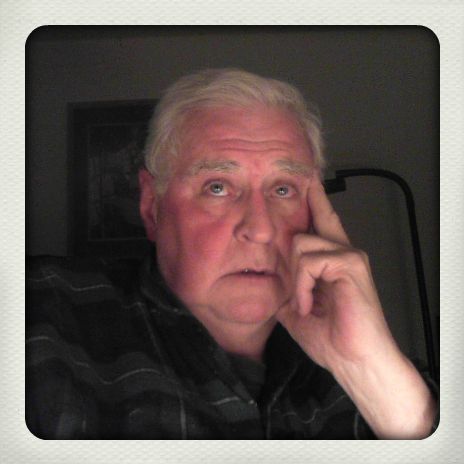
The drifter in the room is a stranger,

he is crazy, is Bigfoot with deer moccasins on−

monster of condominium rooms and dreams.

The drifter in this room used to be my friend.

He spoke straight sentences, they did not sound like poetry-

reverberated like a narrative, special lines good, a few bad,

or stories being unwound by the tongue of a gentleman,

lip service, juggler of simple words to children.

The night is a dark believer in drifters,

they sound sober, affairs with the wind,

the 3 A.M. honking of the Metro trains.

Everything sleeps with a love, a nightmare at night.

The drifter.

—————–

Michael Lee Johnson lived ten years in Canada during the Vietnam era:  now known as the Illinois poet, from Itasca, IL.  Today he is a poet, freelance writer, photographer who experiments with poetography (blending poetry with photography), and small business owner in Itasca, Illinois, who has been published in more than 875 small press magazines in 27 countries; he edits 10 poetry sites.  Michael is the author of The Lost American:  “From Exile to Freedom”, and several chapbooks of poetry, including “From Which Place the Morning Rises”, “Challenge of Night and Day”, and “Chicago Poems”.  He also has over 76 poetry videos on YouTube.

Facebook:  http://www.facebook.com/poetrymanusa
Twitter:  http://twitter.com/poetrymanusa
MySpace.com:  http://www.myspace.com/469391029 

Facebook Group:  Contemporary Poets https://www.facebook.com/groups/807679459328998/

Poet Interview #20 – Michael Lee Johnson

When did you start writing?

I started to write in 1967, 49 years ago. I went into exile due to the Vietnam War era; back then there were no typewriters, no internet; I had to type poems one by one (no photo copies); using international coupons and stamps, via snail mail only, with up to a 6 month wait; and 95 out of 100 journals never responded, much less made a comment about your poems – just a photocopied rejection letter. Therefore, for many years I continued to write but not send the poems out. In 2007, with the advent of the internet, I revised poems and created new ones, and have now been published in 27 different countries. I was nominated for two Pushcart Prizes for poetry in 2015. I have always written poetry but have also had a few articles published related to correctional administration and the Vietnam War experience.

Who/what first inspired you to start writing. Who are your favorite poets?

The Vietnam War and young love started me writing. My favorite poets are many but it goes like this: Carl Sandburg, Robert Frost, Leonard Cohen, Irving Layton, Margret Atwood (early poems), Sylvia Plath, and Charles Bukowski. Other influences on my writing include Hermann Hesse (German writer) and Krishnamurti (writer/philosopher).

How do you first start writing a poem? Does it come to you out of the blue, or do you have a set time where you meet with your Muse each day and let the words just … come? Has your idea of what poetry is changed since you began writing poetry?

Often writing a poem starts with a few lines that expand. Other times I get started while reading other poets. Other times poetry arrives after a few shots of Vodka. I do not set times to write because it does not flow for me that way. Yes, my idea of poetry has changed from romance, depression, and lost love to a form of therapy that is realistic, and is a positive influence in my life at this time. I have expanded from self-centeredness to helping and encouraging dormant poets get started by finding their poetic wings. I read about a famous female poet (whose name I cannot remember) that gave up on poetry because she “found no reality there.”  I do not look for reality in poetry; no one knows what reality is.

Are you on Facebook or Twitter or any other social media? Does that fit into your writing life, and if so, how? Do you have a writing group or community of writers you share your work with? Who are they? What are you reading right now?

Yes to all the above related to social media exposure. My background is social work and for the last 20 years advertising. I am active on Facebook, an administrator for a Facebook poetry group: Contemporary Poets, Their Works, Current Poetry Projects, News, and Links; at this time the group has nearly 2,800 members: https://www.facebook.com/groups/807679459328998/

I’m on twitter/Linkedin/Google +/Stumble Upon/Pinterest/YouTube. As of this writing, I have 89 poetry videos on YouTube and over 40,400 views: https://www.youtube.com/user/poetrymanusa/videos.

In the last year, I have been going to a few poetry critique groups and poetry reading groups here locally in the Northwest Chicago suburbs.

What words of encouragement can you offer other poets who are trying to get their work noticed?

This is the most important question here. When I created the poetry group: Contemporary Poets, Their Works, Current Poetry Projects, News, and Links, I noticed right from the beginning the latent talent embedded within the members of the group. One man contacted me and told me a brief of his story – 60 plus years, been writing for years, and had not done much with his writings. I read them and found a diamond in the rough. His name is Ken Allan Dronsfield who now you can find as an established poet online. There was so much talent I decided to invest my time collecting poems from members and now we are near completion of a poetry book titled “Moonlight Dreamers of Yellow Haze”. I am the editor-in-chief, Ken is my Coeditor, and there will be 52 poets from this poetry Facebook Group in the book. Since this book project began around 3 months ago, about 10 or 12 members (so far) from the group are now establishing themselves as published poets. I am so proud of this group.
Steady Rhythms

Stepping into the Nearest Inspiration
by Richard King Perkins II
 
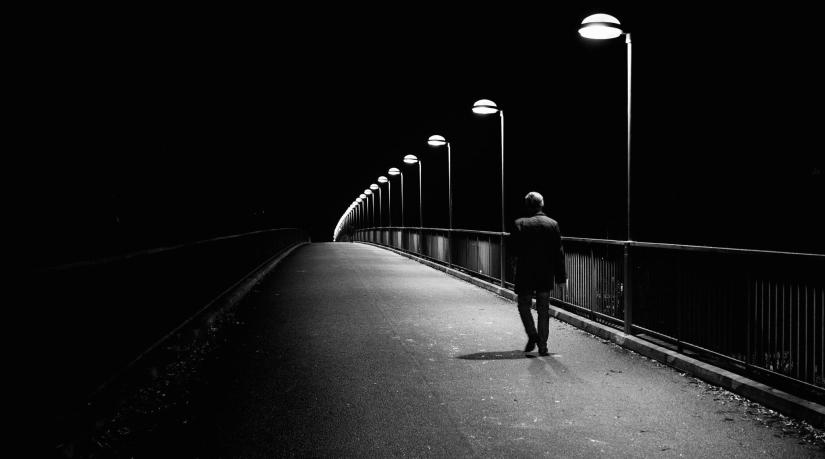
The paths I walk tonight are serene,
like the flight of a ring-tail harrier on rising air currents.
 
An impish moon cavorts with clouds
pushed across a sumptuous ink-blue sky.
 
A small town school is so soundless
in contrast to the day’s flurry
that each morning is the beginning of a small revival.
 
At the edge of an industrial park,
across its concrete promenades, I continue,
 
past a small spread of mulberry trees
to where fields are engaged as nature’s wild mechanism.
 
Tiptoeing along the low river,
all I’ll need is a small raft and a little luck,
and by tomorrow, I’ll be beachcombing on the ocean’s shore.
 
Walking is the most ancient form of expression—
my feet independently rise and descend,
rise and descend,
in a continuous, unbridled rhythm,
 
never certain of where I intend to go
but always taking me where I need to be.
 
 
—————–
Richard King Perkins II is a state-sponsored advocate for residents in long-term care facilities. He lives in Crystal Lake, IL with his wife, Vickie and daughter, Sage. He is a three-time Pushcart nominee and a Best of the Net nominee and was a recent finalist in The Rash Awards, Sharkpack Alchemy, Writer’s Digest and Bacopa Literary Review poetry contests.

Perpetual Motion Machine

Eventually
by Michael Keshigian
 
Staring from the moon
in a dream,
I saw
people of Earth
meander aimlessly
from minute cavities,
following burrows
to dutiful destination
and back again,
some moved faster,
some carried more,
others were prostrate
to fantasy,
but above each hill
hovered ghosts of intentions
not resting, but preparing
singular openings
where well meaning
will be placed.
 
—————–
Michael Keshigian’s tenth poetry collection, Beyond was released May, 2015 by Black Poppy. He has been widely published in numerous national and international journals most recently including Poesy, The Chiron Review, California Quarterly, and has appeared as feature writer in over a dozen publications with 5 Pushcart Prize and 2 Best Of The Net nominations. (michaelkeshigian.com)

Poet Interview #19 – Michael Keshigian

Can you tell us a little bit about yourself? At what age did you start writing? Have you always written poetry? Who/what first inspired you to start writing? Who are your favorite poets?

My career path is music, a performer and teacher in the symphonic genre; it left me little to no time to write. My creative urges were pretty much satiated in that realm. Though I read quite a bit of literature, including poetry, the desire to write occurred after reading the works of the Beats, mostly Ferlinghetti and Corso. The style was appealing, it propelled me to start expressing myself verbally. That group is still among my favorites, though I enjoy reading any author who has something to say and says it well.

How do you first start writing a poem? Does it come to you out of the blue, or do you have a set time where you meet with your Muse each day and let the words just … come? Has your idea of what poetry is changed since you began writing poetry?

I try to allot a designated time on a daily basis to work out ideas then write them down in a way that I feel captures my intention. Like any art form, the muse is secondary to the technique.

Successful creative output is a skill developed over time, coupled with the ability to make it appealing to readers. My perspective regarding poetry, music or any other creative endeavor changed when I realized that the muse is vital, but the song will not be heard nor the words read if it lacks the ability to motivate an audience.

Are you on Facebook or Twitter or any other social media? Does that fit into your writing life, and if so, how?

No. Between writing, performing and teaching, my time is pretty much used up and whatever minutes I might have straggling around, I’d rather use creating rather than just communicating about it. I do keep a web page, but that’s pretty much it.

Do you have a writing group or community of writers you share your work with? Who are they? What are you reading right now?

For the most part, I keep to myself due in large part to my performance schedule. I do have a few virtual relationships with individuals and poetry societies across the country with whom I periodically exchange/share work. What I am reading varies quite a bit with my mood; re-reading HDT’s Walden, poems of W.D. Snodgrass, and George Carlin’s Last Words.

What words of encouragement can you offer other poets who are trying to get their work noticed?

Most importantly, you must be true to yourself, seek out the right market for your work, and be persistent. Look at rejections as constructive criticism and continually work on your delivery. Chances are it is not your idea that has prompted the refusal. Like the Roman poet Lucretius wrote,  “one man’s meat is another man’s poison.” Keep submitting.